
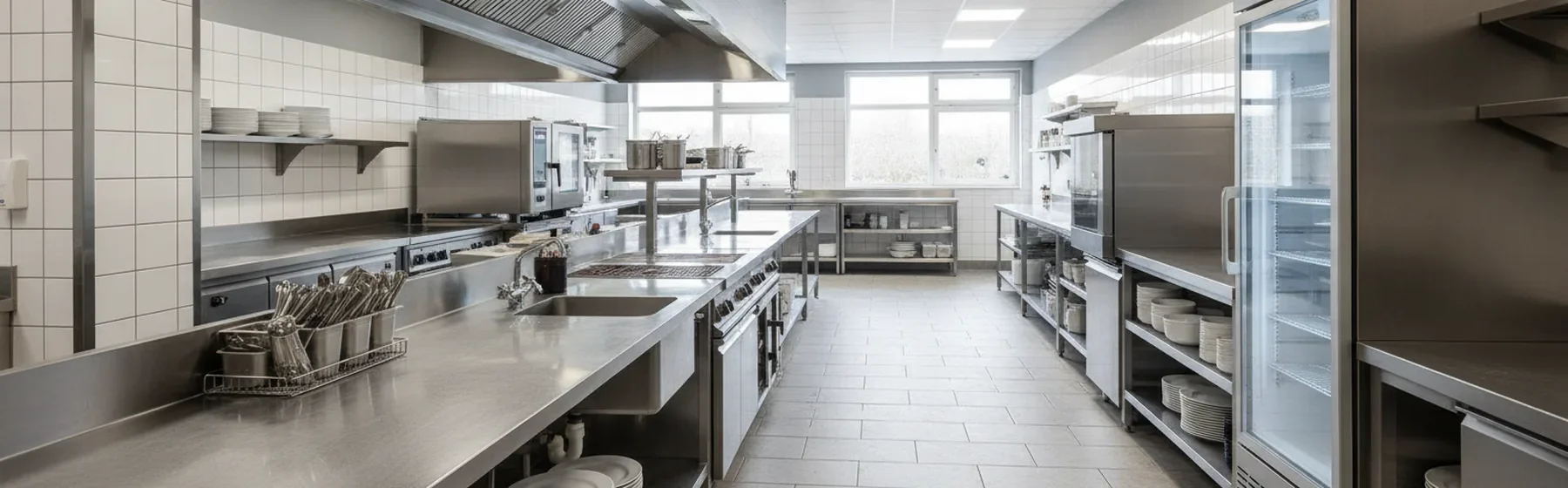
At Schoonmaakbedrijf Groene Hart, you tackle commercial kitchen degreasing effectively. We perform thorough kitchen cleaning to ensure your kitchen operates fire-safely in the hospitality, healthcare, manufacturing, and education sectors.
We degrease the extractor hood, ducts, motor, filters, and grease separator. We clean the cooking line, fryer, oven, and grates. Floors, walls, ceiling, and dishwashing area also receive deep cleaning in accordance with HACCP and NVWA guidelines.
This way, you reduce fire risk, improve air quality, and are ready for inspection. We schedule outside of peak hours. Check out our Google reviews for commercial kitchen degreasing with a 5/5 Google rating.
Degreasing commercial kitchen for food safety and fire safety
Degreasing a commercial kitchen involves the controlled removal of grease, oil, protein residues, and caked-on carbon from all contact surfaces, floors, and ventilation systems in a professional kitchen. This ensures food-safe working practices in accordance with HACCP, prevents fire risks in the extractor hood and grease duct, and allows you to meet the requirements assessed by the NVWA and quality standards such as ISO 22000 and FSSC 22000. At Schoonmaakbedrijf Groene Hart, we combine proven protocols with measurable quality control via VSR KMS and ATP measurements, ensuring your kitchen is demonstrably clean and audit-proof.
How does professional commercial kitchen degreasing work
Effective commercial kitchen degreasing revolves around the Sinner Circle: chemistry, temperature, time, and mechanical action. We tailor alkaline or enzymatic degreasers to the type of contamination and surface, such as stainless steel or coated tiles, increase contact time with food foam or gel, and apply targeted mechanical force using microfiber, pads, and steam. Where food contact is involved, we use food-safe agents and rinse away residues completely. For air extraction and range hoods, we choose foam cleaning with a controlled contact time so that grease layers disappear deep within the duct sections and airflow is restored.
Step-by-step plan for degreasing a commercial kitchen according to HACCP
- Preliminary inspectionWe map the degree of contamination, surfaces, grease duct routing, and risk zones, and determine product selection and working direction.
- Cover and switch off: food is shielded, equipment is de-energized, and water drainage is secured with filters or catch trays.
- Dry pre-cleaning: loose dirt, crumbs, and carbon are removed so that the degreaser works directly on the grease.
- Apply degreaser: controlled dosing of alkaline or enzymatic cleaner as a foam or gel for extended contact time.
- Mechanical action: scrubbing with pads or steam, detailed cleaning of seams, joints, grilles, and filters.
- Aftercare and rinsing: thoroughly rinse and dry food contact surfaces, followed by disinfection where required by the protocol.
- Quality control: visual check, ATP measurement where relevant and recording in the digital logbook for audits and NVWA inspections.
How We Work
How we work
Non-binding intake
We discuss your situation, wishes and requirements by telephone or email/WhatsApp.
Tailor-made offer
You will receive a clear quote within one working day, fully tailored to your location and needs.
Start services
After approval, we immediately schedule the first cleaning round, always flexible and customer-oriented.
Quality and evaluation
Periodic checks, reports and consultations ensure that the level always remains high.
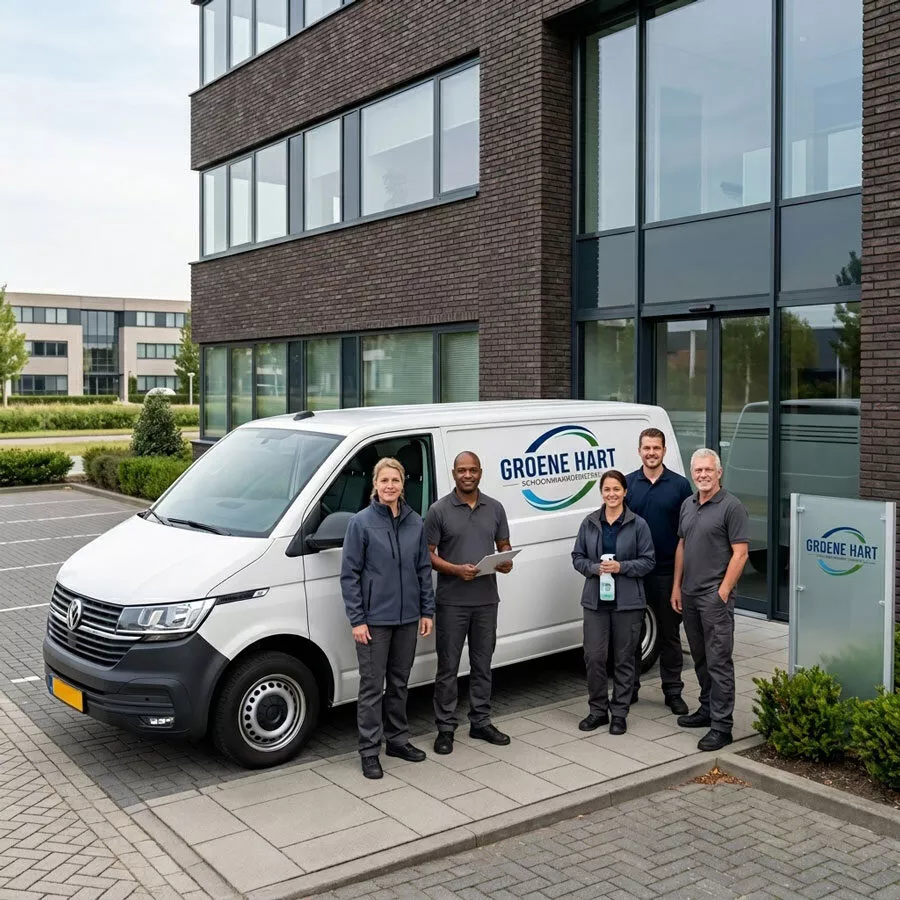
Components and types of contamination in your commercial kitchen
- Extractor hood and grease duct: Accumulation of grease film and aerosols increases the risk of fire and reduces extraction capacity; we clean grilles, motor housings, and duct sections up to the discharge point.
- Frying wall and fryer: polymerization of grease and carbon layers requires intensive foam cleaning and a safe temperature-controlled approach.
- Stainless steel workbenches and cutting zonesWe tackle protein residues and biofilm with food-safe cleaners, followed by proper rinsing and drying.
- Kitchen floor and dentsGrease film on non-slip tiles and in drains leads to slipping and odor nuisance; we combine degreasing with thorough wastewater disposal.
- Cold room and dishwashing areaHidden grease deposits often form around pipes, skirting boards, and hinges; we clean at detailed levels without disrupting the cold chain.
Efficient, professional and always available
Request a free quote today and discover how much you can save.
Call directly?
0172 72 79 77
Periodic frequencies and log management
With a smart schedule, you limit peaks in contamination, extend equipment lifespan, and stand strong during inspections. We plan frequencies based on production flow, menu composition, and peak hours, and record everything in a digital logbook ready for internal audits and NVWA visits. If you want to tighten up your overall kitchen maintenance alongside the degreasing program, read more about our complete hospitality kitchen cleaning service.
- Daily: Degrease worktops, baking lines, hand contact points, and floors and leave them dry for immediate food safety.
- Weekly: detailed cleaning of walls, skirting boards, oven trolleys, filters, and hard-to-reach edges.
- Monthly: intensive deep cleaning of equipment exterior, hinges, and base cabinets with logbook update.
- Quarterly: extractor hood and grease duct cleaning with reporting and photolog for fire insurance and health and safety policy.
Sustainability and compliance without compromise
Wherever possible, we opt for concentrated, biodegradable degreasers, microfiber technology, and water conservation. Our employees are VCA certified, trained in CLP and REACH labeling, and work with personal protective equipment in accordance with occupational health and safety guidelines. This ensures that commercial kitchen degreasing remains safe for your team, guests, and the environment. For locations with strict food contact requirements, we align with FSSC 22000 or your own company protocols and provide measurement reports that your quality manager can immediately verify. If you want a complete hygienic chain from storage to serving, take a look at our food-safe cleaning service.
Applications and practical examples from the kitchen
- Fast service baking line: rapid carbon removal on baking trays and fryer housing with heat-resistant foams and controlled contact time.
- Company restaurant: periodic floor cleaning with anti-slip focus and odor control in drains, combined with stainless steel worktop degreasing.
- Hotel facilities: nightly closing round with duct cleaning and deep basin wall cleaning, including photolog for the auditor.
- Care Kitchen: food-safe approach with strict separation between clean and dirty tracks, plus ATP verification on contact surfaces.
If you want to know what a complete baseline assessment and action plan look like in a professional setting, delve into our restaurant kitchen deep cleaning and discover how we combine degreasing with structural hygiene performance. For specific wall contamination in grill zones, our approach to kitchen wall degreasing in the hospitality industry is ideal.
Why choose cleaning company Groene Hart
You work with a team with over ten years of practical experience in commercial kitchen degreasing, available 24 hours a day for emergencies, reachable via WhatsApp, and a dedicated contact person. We provide customized solutions, sustainable products, transparent pricing, and certified personnel with a lowest price guarantee. Available nationwide, business-oriented, and always with measurable quality assurance. If you want to keep guest areas perfect in addition to production areas, check out our additional services such as hygienic hospitality sanitary cleaning.
Call or WhatsApp 0172 727 977 with any questions, or email info@schoonmaakgroenehart.nl so we can schedule the degreasing of your commercial kitchen immediately, or request your kitchen degreasing quote within 24 hours and receive a clear plan with frequencies, methods, and fixed prices.
Frequently asked questions
How do you degrease a commercial kitchen quickly and safely according to HACCP?
Start with a source-based approach: remove loose residue, dismantle grease filters, and pre-soak them in warm water with a food-safe alkaline degreaser. Next, apply thixotropic foam to stainless steel, walls, and equipment. Allow to act briefly, brush where necessary, rinse with hot water or steam, and dry thoroughly. Disinfect contact surfaces according to your HACCP cleaning plan. Scrub floors using a scrubber-dryer and a degreaser that preserves slip.
We ensure food safety with color coding, clean cloths, and separate water systems, concluding with a visual inspection and, upon request, an ATP measurement. Cleaning Company Groene Hart works sustainably with biodegradable products with an eco-label and provides a logbook with a release certificate. If you require regional service, view our schedule for cleaning services in Rotterdam and receive a free quote immediately.
How often do you need to have the extractor hood, grease filters, and extraction ducts degreased for the NVWA and fire safety?
Grease filters must be checked daily and cleaned at least weekly during intensive baking and frying. Extractor hoods must be degreased monthly. Extraction ducts have an interval based on load: heavy production often quarterly, on average every six months, and light annually. This aligns with widely used commercial kitchen guidelines and demonstrably reduces the fire risk.
The NVWA monitors hygiene and demonstrable cleaning with an up-to-date logbook. Insurers and the fire department may impose additional requirements; check your policy conditions. We inspect on-site, measure grease buildup in ducts, create a photo report, and advise on a schedule that complies with HACCP and the European standard for professional kitchen ventilation. After each visit, you will receive a certificate for your logbook.
Which professional products and methods work best for degreasing stainless steel, tiled floors, and cooking lines in commercial kitchens?
We use food-safe alkaline degreasers, enzymatic grease breakers, and thixotropic foam for vertical surfaces. On stainless steel and cooking lines, we combine foam cleaning with high-temperature steam cleaning for deep cleaning without damaging the material. We clean tiled floors and grout with a scrubber-dryer using low-residue chemicals so that the floor remains non-slip and does not become dirty again as quickly.
We collect condensed grease using microfiber and plastic scrapers to ensure seams and sealant edges remain intact. For quality assurance, we use ATP testing where desired to assess organic contamination, and we employ biodegradable odor and bacterial control around problem areas. If you require urgent attention, we are available 24/7 via WhatsApp, and you will be assigned a dedicated contact person to manage your schedule.
How much does degreasing a commercial kitchen cost, and what factors determine the price in the Netherlands?
The price depends on the size in square meters, the degree of contamination, the accessibility of extraction ducts and the fan, the number of appliances such as fryers and ovens, scheduling outside opening hours, and the desired frequency. With a maintenance contract, the price per visit decreases. We work with transparent pricing, a lowest price guarantee, and a free quote.
As an indication, a one-off deep cleaning of a compact commercial kitchen often costs between 450 and 950 euros, a medium-sized kitchen 950 to 1800 euros, and a large kitchen 1800 to 3000 euros. This is a guideline, and we always assess the situation on-site. If you are in the region, request our schedule for commercial cleaning in Utrecht and receive a tailored proposal today.
Can you degrease your commercial kitchen yourself, or is it better to hire a certified cleaning company?
You can perform daily maintenance yourself: immediately remove fresh grease splatters, clean worktops and cutting surfaces with a food-safe cleaner, boil grease filters, and degrease and rinse floors. Follow your HACCP cleaning plan, use color coding, and keep a logbook so that inspections run smoothly and you are ready for your audit.
For stubborn baked-on grease, elevated extraction ducts, fans, and grease separators, a professional team is the sensible choice. We work VCA certified with fall protection and closed procedures, are available nationwide, have 10 years of experience, certified personnel, and 24/7 emergency service. This way, you demonstrably meet hygiene and fire safety requirements and limit downtime to a minimum.


