


With clear, workable instructions, you turn every safety data sheet into a practical basis for safe cleaning. You immediately see which personal protective equipment, hazard pictograms, storage rules, and first aid measures really matter on the shop floor.
These 7 tips for translating Safety Data Sheets into workable instructions faster will help you quickly assess the risks of cleaning products. Consider an employee using a descaler in a small washroom: proper gloves, ventilation, and dosage prevent trouble.
You will learn how to convert Safety Data Sheets into clear work instructions for cleaning staff, including chemical risks, spills, waste disposal, and emergency measures. This way, everyone understands what working safely means, without having to pore over long technical texts.
Translating Safety Data Sheets into clear work instructions
A Safety Data Sheet, often abbreviated as SDS, describes the properties, risks, storage, personal protection, first aid, and disposal of a chemical product. Within REACH and the CLP Regulation, the SDS is an essential document for working safely with cleaning agents, disinfectants, degreasers, floor strippers, and other hazardous substances. For a cleaning company, a Safety Data Sheet only becomes valuable when you convert the information into a short, understandable, and immediately actionable work instruction.
The first Safety Data Sheets originated in industrial environments where employees worked with solvents, acids, and flammable liquids. Today, every professional cleaning organization uses Safety Data Sheets to limit exposure, incidents, and environmental damage. Cleaning Company Groene Hart helps you translate SDS information into practical instructions for daily cleaning, periodic maintenance, floor cleaning, and specialist hygiene.
Why an SDS is not immediately usable in the workplace
A Safety Data Sheet contains sixteen standard sections, including substance identification, hazards, composition, first aid, fire fighting, spill response measures, storage, exposure control, physical properties, toxicology, ecology, transport, and regulations. This information is necessary, but often too extensive for a cleaner who needs to know which product can be used safely just before a shift.
A workable instruction therefore extracts the correct information from the VIB and links it to a task, location, and product. Examples include cleaning sanitary facilities, degreasing a kitchen wall, disinfecting a treatment room, or stripping a floor. The core question is always: what must you do, what must you not do, what protection do you wear, and what do you do in the event of an incident?
The 7 tips to translate Safety Data Sheets into workable instructions faster
- Tip 1: Start with the task Do not look at all sixteen categories first, but determine what the product is used for. A limescale remover for sanitary areas requires different instructions than a disinfectant for a healthcare facility or a degreaser for a professional kitchen. Link each VIB to a specific cleaning action.
- Tip 2: remove hazard pictograms and H phrases Note the CLP pictograms, such as corrosive, flammable, harmful to health, or hazardous to the environment. Convert the relevant H phrases into plain language. For example, “Causes serious eye irritation” becomes: avoid splashes, wear safety glasses, and rinse eyes immediately with water upon contact.
- Tip 3: Make personal protective equipment visible Section 8 of the Safety Data Sheet provides information on gloves, eye protection, respiratory protection, and ventilation. Translate this into a brief workplace check: put on nitrile gloves, use safety glasses, ventilate the area, and never mix different substances.
- Tip 4: always state dosage and contact time Many safety risks arise from excessive concentrations. Therefore, clearly state how much product to use per liter of water, which dosing pump is required, and how long a product needs to act. This prevents waste, damage to surfaces, and unnecessary exposure to chemical substances.
- Tip 5: Create separate instructions for spills and incidents The sections on first aid and accidental release are crucial. Briefly describe what to do in the event of skin contact, eye contact, inhalation, leakage, or an overturned jerrycan. Ensure that absorbent material, clean water, waste bags, and emergency numbers are available.
- Tip 6: distinguish between storage, transport, and use A product may appear safe during use but pose risks if stored incorrectly. Indicate for each product whether it must be stored frost-free, upright, sealed, ventilated, or separated from other products. Pay extra attention to acids, chlorine products, and products containing solvents.
- Tip 7: test the instruction for comprehensibility Have an employee carry out the work instruction without explanation from a supervisor. Is it immediately clear which product, dosage, protection, and emergency action are required? If so, the translation is successful. If there is any doubt, shorten the text further and add recognizable pictograms.
What information must always be included in cleaning instructions
Good instructions for safe cleaning fit on a single page or in a digital work app. Use fixed sections per product so that employees quickly recognize information. Digital solutions such as Microsoft Teams, SharePoint, QR codes on cabinets, and tablets in cleaning areas help to always display the current version of a work protocol.
- Product name and application: State the trade name, the purpose of the product, and the areas where you may use it.
- Dosage and method: Describe the quantity, water temperature, contact time, necessary materials, and sequence of steps.
- Personal protection: Indicate whether gloves, goggles, apron, non-slip shoes, or respiratory protection are mandatory.
- Prohibited actions: Clearly state which products should never be used together, which surfaces are damaged, and when you need to ventilate a room.
- Emergency measures: Note what to do in case of splashes, leakage, fire, skin contact, eye contact, and exposure by inhalation.
How We Work
How we work
Non-binding intake
We discuss your situation, wishes and requirements by telephone or email/WhatsApp.
Tailor-made offer
You will receive a clear quote within one working day, fully tailored to your location and needs.
Start services
After approval, we immediately schedule the first cleaning round, always flexible and customer-oriented.
Quality and evaluation
Periodic checks, reports and consultations ensure that the level always remains high.

Various types of safety information and work instructions
Not every Safety Data Sheet requires the same translation. For daily interior cleaning, a short product card is often sufficient. For industrial cleaning, construction cleaning, healthcare facilities, laboratories, hospitality, and logistics environments, a more extensive protocol is required. Work permits, ventilation, waste streams, machine use, and the presence of vulnerable persons also play a role in these situations.
In healthcare environments, disinfection requires extra attention to contact time, microbial load, and separation between clean and soiled materials. Read more about professional cleaning for healthcare practices if you want to combine work protocols with hygiene, disinfection, and safe product selection. In hospitality environments, food safety, grease removal, and the prevention of chemical residues are important points of attention.
- Daily cleaning instructions: suitable for toilets, offices, common areas, pantries, and regular interior maintenance.
- Disinfection protocol: focused on contact time, pre-cleaning, correct concentration, and limiting cross-contamination.
- Machine instruction: combines the safety data sheet with rules for scrubber-dryers, single-disc machines, and dosing systems.
- Incident card: Provides immediate instructions in case of spills, injuries, eye contact, defective packaging, and unsafe vapor formation.
From safety data sheet to verifiable cleaning process
A serious cleaning process uses version control. Check at least annually whether the Safety Data Sheet is still up-to-date, especially when a supplier changes a formula, packaging, or classification. Ensure that the product name on the bottle matches the product card and that employees do not pour products into unlabeled bottles. Labeling, inventory management, and a designated storage location make safe behavior much easier.
In addition, conduct a brief workplace inspection. Check whether the correct resources are present, whether dosing equipment is functioning, whether personal protective equipment is available, and whether employees know where to find incident instructions. This aligns with the Working Conditions Act, the requirements of the Netherlands Labour Inspectorate, and working in accordance with a current risk inventory and evaluation.
Have safe instructions created for your cleaning location
Schoonmaakbedrijf Groene Hart translates complex safety data sheets into clear product cards, task-oriented cleaning instructions, and practical protocols. You benefit from certified personnel, VCA-certified work, sustainable and environmentally friendly cleaning advice, transparent pricing, a dedicated contact person, and more than 10 years of experience. For business locations throughout the Netherlands, we offer customized cleaning, 24-hour emergency service, and availability via WhatsApp. Request a quote immediately for safe and workable cleaning instructions if you want faster control over products, employees, and safe working practices.

Frequently asked questions
1. How do you quickly translate a safety data sheet into a clear cleaning work instruction?
Start with the practical core of the Safety Data Sheet, also known as the SDS. First, read the product name, hazard pictograms, signal word, personal protective equipment, dosage, ventilation, first aid, and measures in case of spills. Convert this information into concise language that a cleaner understands immediately while working. Think of instructions such as: use gloves, dose 25 milliliters per bucket, open a window, and never mix with chlorine.
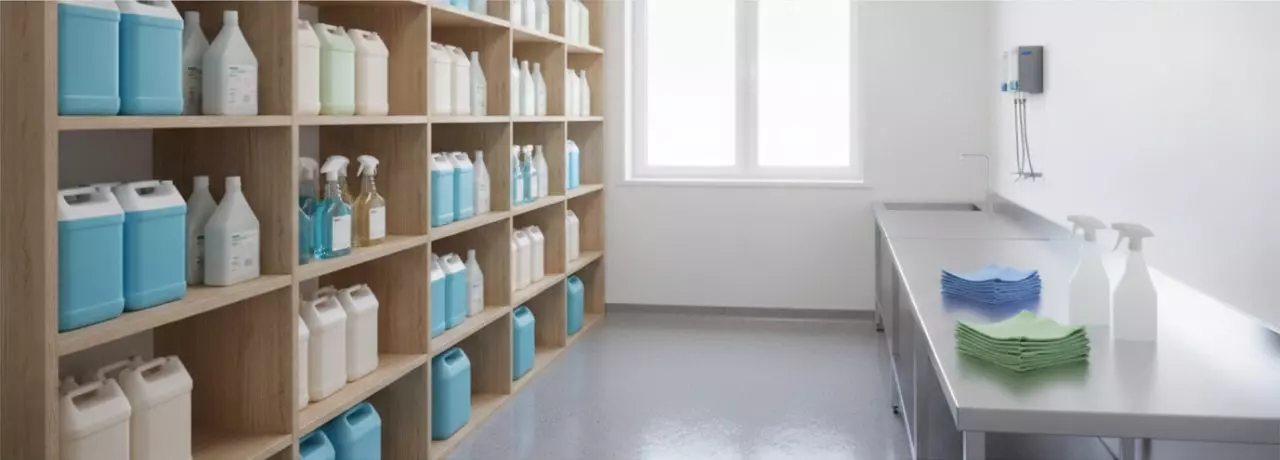
A workable instruction describes not only the risk, but especially the action. At Schoonmaakbedrijf Groene Hart, a Safety Data Sheet (SDS) is therefore translated into fixed work moments: preparation, use, cleanup, and action in the event of an incident. This prevents an employee from having to search through sixteen technical categories while needing to be able to work quickly and safely.
2. What are the 7 tips for translating Safety Data Sheets into workable instructions faster?
The seven most important tips are: choose the right product version, read the sixteen SDS sections specifically, record only risks that occur during cleaning work, translate technical terminology into clear actions, add dosage and contact time, specify protective equipment, and create a step-by-step plan for first aid and spills. This approach aligns with the requirements of REACH, CLP, and the Working Conditions Act.
Next, check whether the instruction works on the work floor. For example, have a cleaner explain what he does when descaler gets in his eyes or when cleaning agent leaks onto the floor. If he understands the instruction without further explanation, it is practical enough. Adjust words that are too technical, too long, or not recognizable to the team.
3. Which sections of a safety data sheet are most important for cleaning staff?
For cleaning staff, product identification, hazard pictograms, hazard statements, precautions, personal protection, safe storage, spill control, and first aid are particularly important. The recommended dosage also deserves attention. An excessive dosage can not only cause damage to surfaces but also increases exposure to harmful substances.
Section 2 of the VIB states the hazards of the product. Section 4 covers first aid, section 6 describes what to do in the event of a leak, and section 8 lists suitable gloves, eye protection, and ventilation. Section 13 assists with safe waste disposal. Use this information to create a compact instruction card for each product that is available on site.
4. How do you make safety instructions understandable for cleaners who work with chemical agents?
Write as if you were standing next to the employee during a cleaning round. Replace technical terms such as adequate ventilation with turn on windows or mechanical extraction. Replace avoid exposure with prevent contact with skin, eyes, and clothing. Where possible, add a concrete example, such as do not use acidic toilet cleaner on a chlorine-based product.
Work with recognizable, fixed components: this is what you need, how to dose, how to use it safely, what to do in case of contact with skin or eyes, and how to store the product. Use pictograms alongside text, but never let pictograms replace the full explanation. Discuss the instructions during the handover and have new employees demonstrate the procedures before they start independently.
5. When should you re-check workable instructions based on a safety data sheet?
Check the instructions immediately when a supplier provides a new safety data sheet, when the composition or classification changes, or when you switch to a different cleaning agent. You must also assess whether the instructions are still clear and complete after an incident, complaint, skin irritation, misuse, or near miss.
In addition, schedule a practical check with the supervisor and employees at least annually. Compare the instructions with the manufacturer's current Safety Data Sheet (SDS) and pay attention to changes in CLP labeling, personal protective equipment, and storage conditions. In case of doubt regarding hazardous substances, limit values, or legal obligations, an inspection by an occupational hygiene expert or safety advisor is advisable.


