With targeted particulate matter extraction, you keep the air in the office, workshop, and warehouse noticeably cleaner. HEPA filters capture very small dust particles, but you only achieve real results with proper placement, airflow, and capacity.
These 9 HEPA tips for targeted fine dust extraction in commercial spaces help you focus on source extraction, ventilation, airflow, filter class, and maintenance. Think of a workshop where sawdust is generated or an office with a lot of printer dust.
You prevent particulate matter from spreading throughout the room by placing extraction systems close to the source, replacing filters on time, and measuring air quality. This way, you protect employees, equipment, and a fresh working environment.
What targeted particulate matter extraction with HEPA entails
Targeted particulate matter extraction involves capturing dust particles as close to the source as possible, before they spread throughout a business space. Examples include drilling dust in a workshop, toner powder from printers, wood dust in a warehouse, plaster dust after maintenance, or fine dirt in a busy office. A HEPA filter traps very small particles and supports healthier indoor air for employees, visitors, and customers.
HEPA stands for High Efficiency Particulate Air. Within the European standard EN 1822, HEPA filters of classes H13 and H14, among others, are used. An H13 filter captures at least 99,95 percent of the most penetrating particles. H14 goes even further with at least 99,995 percent. Its operation is based on interception, collision, and diffusion, causing both larger and ultrafine dust particles to remain trapped in the filter medium.
HEPA filtration was developed in the 1940s for situations where air quality and dust control were crucial. Today, this filtration is relevant for offices, healthcare facilities, educational institutions, logistics centers, the hospitality industry, production environments, and property management. The goal is clear: extract particulate matter where it originates, limit dispersion, and make cleaning more efficient.
Why particulate matter extraction is important in business spaces
Fine dust is not always visible. PM10, PM2,5, and ultrafine particles can remain suspended in the air for a long time and settle on desks, equipment, ventilation grilles, floors, and shelving. In an office, a printer corner can unknowingly become a source of dust. In a construction project, sawdust often spreads to corridors and adjacent workspaces. In a warehouse, forklift movements and pallet traffic cause dust to be stirred up again.
A standard vacuum cleaner without reliable HEPA filtration can partially blow small particles back into the air. Therefore, professional fine dust extraction requires the right combination of source extraction, air purification, maintenance cleaning, and safe filter replacement. For offices and multi-tenant buildings, you can also read more about professional office facility cleaning that aligns with a healthy work environment.
- Better air quality: Less airborne dust helps keep workplaces, reception areas, and meeting rooms more comfortable and tidy.
- Less dust dispersion: Extraction at the source prevents fine dust from entering the building further via shoes, clothing, ventilation, and walkways.
- Equipment Protection: Servers, printers, production machines, and ventilation systems remain cleaner when dust loads are limited.
- More efficient cleaning: When particulate matter is captured immediately, it takes less time to keep surfaces, floors, and inventory clean.
- Professional appearance: A visibly dust-free business premises gives customers, employees, and suppliers confidence.
How We Work
How we work
Non-binding intake
We discuss your situation, wishes and requirements by telephone or email/WhatsApp.
Tailor-made offer
You will receive a clear quote within one working day, fully tailored to your location and needs.
Start services
After approval, we immediately schedule the first cleaning round, always flexible and customer-oriented.
Quality and evaluation
Periodic checks, reports and consultations ensure that the level always remains high.

9 HEPA tips for targeted particulate matter extraction
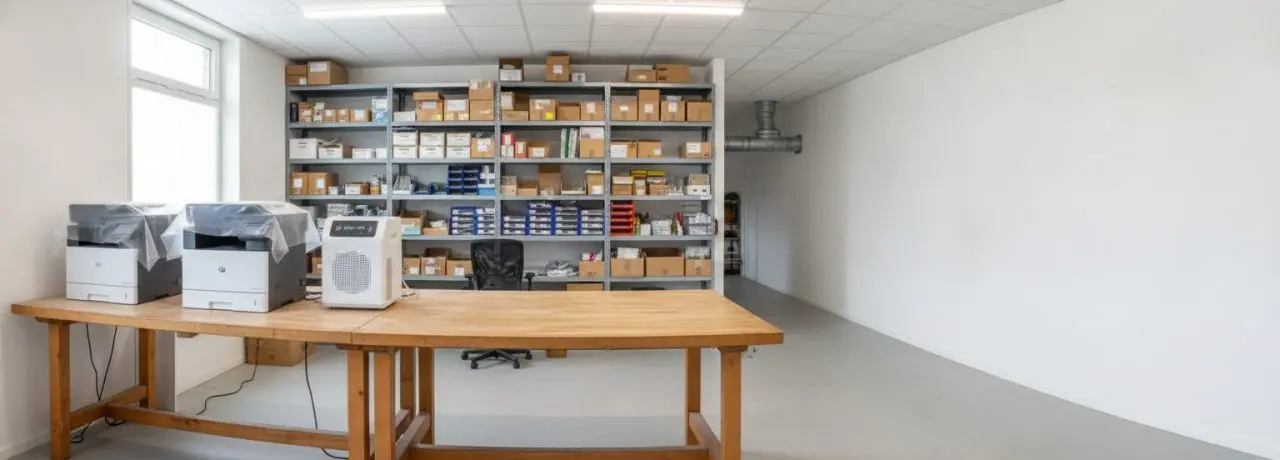
- Tip 1: Map dust sources per room: Look beyond visible dust. Check printers, copy rooms, entrances, warehouse aisles, workbenches, ceilings, ventilation grilles, and areas where drilling, sanding, or sawing takes place. This way, you place fine dust extraction where it will have the most effect.
- Tip 2: Choose at least an H13 HEPA filter: For commercial particulate matter extraction, an H13 filter is often a strong foundation. Choose an H14 when the space places higher demands on air purity, such as in certain healthcare, laboratory, or production environments.
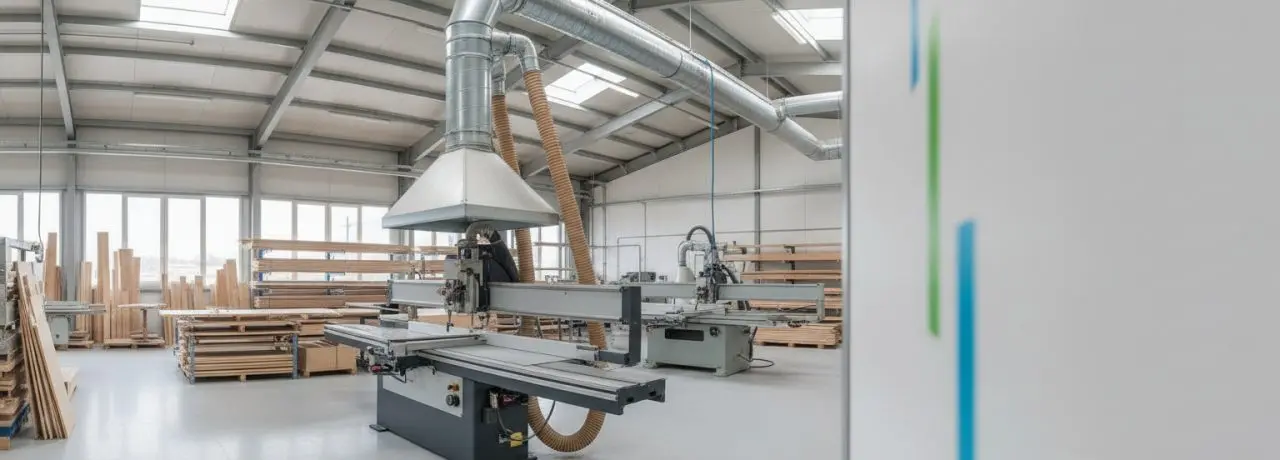
- Tip 3: Place the extraction unit close to the source: A portable air purifier in the corner of the room is less effective than an extraction point close to the dust source. Place the unit next to a saw table, printer zone, maintenance area, or workbench, for example.
- Tip 4: Match the air capacity to the room volume: Calculate the volume of air in the room and choose a device with sufficient capacity. A unit that is too small runs continuously without achieving the desired air exchange.
- Tip 5: Combine source extraction with HEPA vacuuming: Source extraction prevents the spread of dust during work. HEPA vacuuming removes residual dust from floors, baseboards, furniture, and hard-to-reach areas. The combination delivers a significantly cleaner result.
- Tip 6: Use a pre-filter for coarse dirt: A pre-filter captures larger fibers, hair, and dust particles. As a result, the HEPA filter becomes saturated less quickly and the airflow remains more consistent.
- Tip 7: Check the airflow and placement: Do not place extraction equipment behind cabinets, curtains, or high stacks of boxes. Keep the air intake clear and prevent clean air from being drawn back in immediately. A logical airflow increases efficiency.
- Tip 8: Replace filters according to a fixed maintenance plan: A full HEPA filter reduces suction power. Note the installation date, usage intensity, pressure loss, and replacement time. Seal used filters immediately to limit the re-release of dust.
- Tip 9: Combine fine dust extraction with periodic professional cleaning: Without structural cleaning, settled fine dust remains on floors, shelving, and inventory. Cleaning Company Groene Hart combines targeted dust removal with sustainable and environmentally friendly customized cleaning.
Which HEPA extraction solution suits your business premises
The right solution depends on the source, the room volume, the occupancy, and the nature of the work. An office often requires quiet mobile air purification and HEPA vacuuming. A logistics environment requires robust extraction at loading and unloading zones, racking, and workstations. For renovation, maintenance, and construction dust, construction vacuums with HEPA filters and direct source extraction are essential.
- Mobile HEPA air purifier: Suitable for offices, waiting areas, meeting rooms, and temporary workspaces where extra air filtration is required.
- HEPA construction vacuum cleaner: Suitable for drilling dust, plaster dust, concrete dust, and sawdust during maintenance, renovation, and handover.
- Local source extraction: Suitable for workbenches, grinding, printers, packaging stations, and production operations with a solid source.
- Industrial dust extraction: Suitable for larger halls, warehouses, logistics, and production facilities where a lot of dust is released or stirred up again.
- HEPA backpack vacuum cleaner: Suitable for stairwells, offices, healthcare facilities, and spaces with a lot of furniture or limited room to move.
Working safely with HEPA filters and dust extraction
Safe fine dust extraction begins with clear work agreements. Close doors to adjacent rooms as much as possible during dust-generating work. Cover sensitive equipment, clean from top to bottom, and wear appropriate personal protective equipment when the dust load requires it. Never allow employees to shake out or reuse a full filter.
For larger projects, it is advisable to cordon off zones and keep walkways clear. Especially in industry, warehouses, and construction sites, this prevents fine dust from spreading to offices, canteens, and sanitary facilities. For larger commercial spaces, you can read more about cleaning for industry and logistics, with a focus on dust control and safe work processes.
A practical maintenance plan for clean business premises
A good maintenance plan makes particulate matter extraction measurable and manageable. Record for each room which dust source is present, which HEPA system is used, when filters are checked, and how often surfaces are cleaned. Pay extra attention to ventilation grilles, cable trays, skirting boards, window sills, machines, upholstery, and high surfaces where dust accumulates.
Schoonmaakbedrijf Groene Hart operates nationwide, with certified personnel, transparent pricing, a dedicated contact person, and over 10 years of experience. You can request a quote directly for fine dust extraction in your business premises for targeted particulate matter extraction, HEPA cleaning, and professional maintenance . We are also available 24/7 via WhatsApp for emergencies.
Frequently asked questions
1. What are the 9 HEPA tips for targeted particulate matter extraction in commercial spaces?
The core of targeted particulate matter extraction is capturing dust where it originates. The 9 HEPA tips are: map dust sources, place extraction close to the source, choose a genuine HEPA filter, monitor airflow, prevent leakage around filters, combine source extraction with ventilation, clean floors with a HEPA vacuum, replace filters on time, and periodically measure air quality. This way, you limit the spread of PM2,5, PM10, construction dust, wood dust, and toner dust in offices, workshops, and healthcare environments.
In practice, the distance to the dust source makes a significant difference. When sanding, drilling, or emptying a printer container, extraction next to the work activity is more effective than an air purifier on the other side of the room. Cleaning Company Groene Hart helps you with a practical plan for source extraction, HEPA cleaning, and dust control. Read more about professional cleaning for commercial spaces in Utrecht.
2. Why is a HEPA filter important for fine dust in an office or business premises?
A HEPA filter captures very small particles that are barely visible to the naked eye. Fine dust remains suspended in the air for a long time, especially in areas with heavy foot traffic, printers, textiles, boxes, or activities such as sawing and sanding. A properly sealed HEPA filter system helps reduce the concentration of airborne particles, keeping workplaces cleaner and reducing the amount of dust that ends up on desks, equipment, and ventilation grilles.
Pay attention not only to the filter material but also to the device's connection. Air escaping past a filter is not effectively cleaned. Therefore, check the seals, filter housing, and maintenance status. For commercial applications, a filter classification according to EN 1822 is a useful quality indicator. In case of exposure to hazardous substances, such as quartz dust or certain types of industrial dust, a risk assessment and advice from an occupational health and safety expert is advisable.
3. Where should you place HEPA extraction for the best results against fine dust?
Position HEPA extraction as close as possible to the point where fine dust is released. Consider the saw table in a workshop, a grinding station, a copying room, an entrance with a lot of tracked-in dirt, or a room where cardboard boxes are unpacked. Direct the airflow so that dust moves away from the employees' breathing zone. An extraction nozzle close to the source prevents dust from circulating throughout the entire business premises first.
Avoid a setup where the exhaust air stirs up dust or blows it towards colleagues. Take doors, vents, and walkways into account in your assessment, as drafts can disrupt extraction. In an office, an air purifier often works best in an open space with sufficient intake room, whereas in a workshop, local source extraction takes precedence. For location-specific advice, you can look at commercial cleaning and dust control in Rotterdam.
4. How often do you need to maintain HEPA filters and fine dust extraction?
Check a HEPA filter system at least monthly for blockages, damage, noise, air displacement, and filter notifications. The actual replacement frequency depends on the dust level, duration of use, and type of contamination. A filter can last longer in a quiet office than in a carpentry workshop or distribution room. Do not wait solely for a notification from the device, as visible dust accumulation and decreasing suction power call for immediate action.
Clean the pre-filters according to the manufacturer's instructions or replace them in a timely manner. This protects the HEPA filter and maintains airflow. Use appropriate personal protective equipment when changing soiled filters and immediately seal used filters in a bag. Regular HEPA vacuuming of floors, baseboards, upholstery, and ventilation grilles prevents settled fine dust from re-entering the air.
5. Is only an air purifier with a HEPA filter sufficient for a healthy business space?
An air purifier with a HEPA filter is useful, but rarely provides the complete solution. In the case of active dust formation, source extraction is the most important measure, followed by adequate ventilation, thorough cleaning, and appropriate work arrangements. An air purifier works best as a supplement in offices, meeting rooms, reception areas, and spaces where dust cannot be completely captured at the source. Choose a capacity that matches the volume of the room and the actual dust load.
An effective approach combines technology and cleaning discipline. Use a HEPA vacuum instead of dry sweeping, remove dust from high surfaces, limit open storage of cardboard, and check ventilation systems. If in doubt, measure air quality with a particulate matter meter and assess patterns during busy or dusty work activities. For structural maintenance, read more about professional commercial cleaning in The Hague.