


A clean waste collection point starts with a smart layout that logically brings together waste, traffic, and cleaning. With clear bins, sufficient capacity, and a designated spot for each waste stream, you prevent overflowing containers, litter, and unpleasant odors.
In these 7 tips for keeping waste collection points cleaner with better layout, you will see how lighting, lockable containers, paving, walkways, and clear signage make the difference. Think of a busy apartment complex where residents can quickly dispose of waste without placing clutter next to the bin.
A well-designed waste collection point makes waste separation easier and helps your cleaning company work faster and safer. This keeps the surroundings tidy, residents experience less nuisance, and waste management gains structural better control.
What are clean waste collection points and why is the layout a determining factor?
Waste collection points are designated locations where employees, visitors, residents, or customers dispose of residual waste, paper, cardboard, glass, plastic, metal, and drink cartons (PMD), organic waste (GFT), and confidential materials. You can find them in offices, company restaurants, healthcare facilities, schools, shops, homeowners' association complexes, distribution centers, and multi-tenant business buildings, among others. A clean waste collection point is not just about an empty bin. The entire layout determines whether waste is disposed of correctly, whether dirt accumulates, and whether the environment remains fresh.

In the Netherlands, waste separation has become increasingly important due to the circular economy, municipal waste regulations, the Working Conditions Act, and hygiene guidelines. While waste containers were previously mainly placed out of sight, a modern waste collection point requires clear walking routes, sufficient capacity, good ventilation, security, and a fixed cleaning protocol. With these 7 tips for keeping waste collection points cleaner through better layout, you can prevent odor nuisance, litter, pests, and unnecessary cleaning costs.
Tip 1: Choose the right location for each waste drop-off point
A waste disposal point quickly becomes cluttered if placed in an illogical location. Place bins close to where waste is generated, but not in the middle of a busy passageway, emergency exit, or entrance. In an office, a central waste disposal point near the pantry works well. In a hospitality establishment, a waste area should be located near the dishwashing area or commercial kitchen. At logistics locations, a waste station close to the work floor is practical, provided that forklifts, roll containers, and pedestrians have sufficient space.
Also pay attention to the surface. A flat, closed floor without seams is easier to clean than porous concrete or damaged tiles. Where possible, choose a floor with a raised edge so that leaking wastewater does not flow into surrounding areas. Proper positioning makes cleaning faster and reduces the chance of bags being placed next to the container.
- Entrance and reception area: Keep trash cans small and closed so that visitors do not see full bags, odors, or loose packaging.
- Pantry and canteen: Place different waste streams together so that employees can separate them properly in a single operation.
- Waste area: Ensure sufficient turning circle for roll containers, cleaning carts, and employees with full waste bags.
- Outdoor location: Choose a spot out of direct sunlight, sheltered from rain, and accessible to the waste collector.
How We Work
How we work
Non-binding intake
We discuss your situation, wishes and requirements by telephone or email/WhatsApp.
Tailor-made offer
You will receive a clear quote within one working day, fully tailored to your location and needs.
Start services
After approval, we immediately schedule the first cleaning round, always flexible and customer-oriented.
Quality and evaluation
Periodic checks, reports and consultations ensure that the level always remains high.
Tip 2: Make waste separation simple and immediately understandable
The best layout for a clean waste collection point is easy to understand. Too many bins, unclear stickers, or different colors per floor cause confusion. This leads to incorrect waste, overflowing bins, and contaminated waste streams. Use the same colors, pictograms, and designations everywhere. Consider blue for paper and cardboard, green for organic waste, orange for plastic, metal, and drink cartons (PMD), and gray or black for residual waste.

Pictograms work better than lengthy explanations, especially at locations with visitors, temporary staff, or international teams. Place the indicator at eye level and repeat it on the lid or the drop-off opening. Make the opening suitable for the type of waste. A narrow slot helps with paper, while a round opening is suitable for cups and bottles. This way, you guide behavior without anyone having to think.
Use only bins that match the actual waste stream. A small residual waste bin next to a large paper container encourages separation. A large, open residual waste bin, on the other hand, invites people to throw everything in. Cleaning company Groene Hart can assess the correct layout, cleaning frequency, and waste disposal, so request a quote for the professional cleaning of your waste collection points.
Tip 3: Adjust capacity to peak times
Full waste bins are one of the biggest causes of dirty waste disposal points. The capacity of containers must match the number of users, the type of waste, and the time of day. A company canteen produces a lot of packaging and food scraps around lunchtime. In an office, peaks occur after meetings. In a healthcare environment, hygiene products and disposables can take up volume faster than expected.
Measure how quickly bins fill up over a few weeks. Note days with deliveries, events, meetings, or extra staff. Do not immediately enlarge every container afterwards, but adjust the capacity per waste stream. A compact bin for residual waste and larger bins for paper, cardboard, and PMD make waste separation clearer.
- Daily emptying: Suitable for waste collection points with food scraps, coffee grounds, wet waste, or heavy use.
- Emptying after peak hours: Handy for canteens, meeting venues, and reception areas where waste accumulates at fixed times.
- Extra container during busy periods: Prevents waste from ending up next to the bin during renovations, moves, or events.
- Sensor or fill level control: Provides insight into the correct emptying time and prevents unnecessary rounds.
- Reserve stock of waste bags: Keep bags, gloves, and absorbent material available immediately at the waste disposal point.
Tip 4: Use sealable containers to protect against odors and pests
Sealable waste bins keep odors, flies, fruit flies, mice, and other pests out more effectively. Organic waste, coffee grounds, food packaging, and residual waste, in particular, require a tightly fitting lid. Avoid bins with damaged rims or loose lids. Moisture, dirt, and bacteria accumulate there, while the bin seals less effectively.
Ensure ventilation and sufficient air circulation in an indoor waste room. An extraction point or regular air exchange limits odor formation. Do not place waste containers directly against a radiator, hot water tap, or heat-emitting equipment. Heat accelerates odor development and makes the waste room unpleasant for employees and visitors.
For outdoor containers, a sturdy enclosure with a lockable door helps. This keeps bags dry, limits litter, and prevents unauthorized persons from dumping waste. Municipalities, environmental services, and property managers are increasingly paying attention to tidy waste storage at business premises and residential complexes.
Tip 5: Choose materials that are quick and thorough to clean
A better interior design starts with low-maintenance materials. Stainless steel, smooth synthetic material, and coated metal are easy to wipe down and resistant to daily use. Wooden surrounds may look attractive, but they require extra attention when moisture, debris, or cleaning agents seep into the seams. Therefore, choose closed panels, rounded corners, and a construction without hard-to-reach gaps.
Use drip trays under waste containers that may leak liquid. Place garbage bags tightly around the rim and check that the size fits. A bag that is too small tears more easily, while a bag that is too large drags on the ground and spreads dirt. Keep a fixed cleaning kit ready with microfiber cloths, pH-neutral cleaner, disinfectant where necessary, gloves, and color coding for cleaning materials.
Tip 6: Work with a fixed cleaning protocol and clear tasks
A well-organized waste collection point remains clean only when it is clear who is responsible. Document who replaces waste bags, who removes the containers, who cleans up spills, and who checks whether waste is separated correctly. Differentiate between daily cleaning, periodic thorough cleaning, and incident cleaning following a leak or contamination.
Structure your protocol around visible inspection points. Consider the inside of the lid, handles, floor, wall behind the container, casing, drain, and odor. At locations with food, healthcare waste, or high visitor traffic, prompt action is especially important. A clean waste area supports hygiene, working comfort, and a professional appearance.
- Check the fill level: Check at least at the beginning and end of every workday whether bins need to be emptied in a timely manner.
- Remove loose dirt: Clean up waste around the container immediately before it is trampled or scattered.
- Clean contact points: Carefully wipe down covers, edges, pedals, handles, and casings.
- Handle spills: Use absorbent material in case of moisture and then clean the floor according to the applicable procedure.
- Record details: Note recurring odors, damage, incorrectly disposed of waste, or pests.
Tip 7: Make good behavior visible and measurable
The layout of waste collection points influences behavior. People are more likely to dispose of waste correctly when the route is logical, the bin is clean, and the instructions remain immediately visible. Post brief instructions at the waste collection point, but keep the message positive and practical. State what does belong in a bin instead of just what is not allowed.
Check how much residual waste, paper, cardboard, PMD, and GFT is collected every month. A growing amount of residual waste can indicate unclear bins or insufficient capacity. A lot of waste next to the container may mean that the opening is too small, the bin is emptied too late, or the location has been inconveniently chosen. By recognizing these signals early, your waste collection point remains cleaner, safer, and more pleasant for everyone.
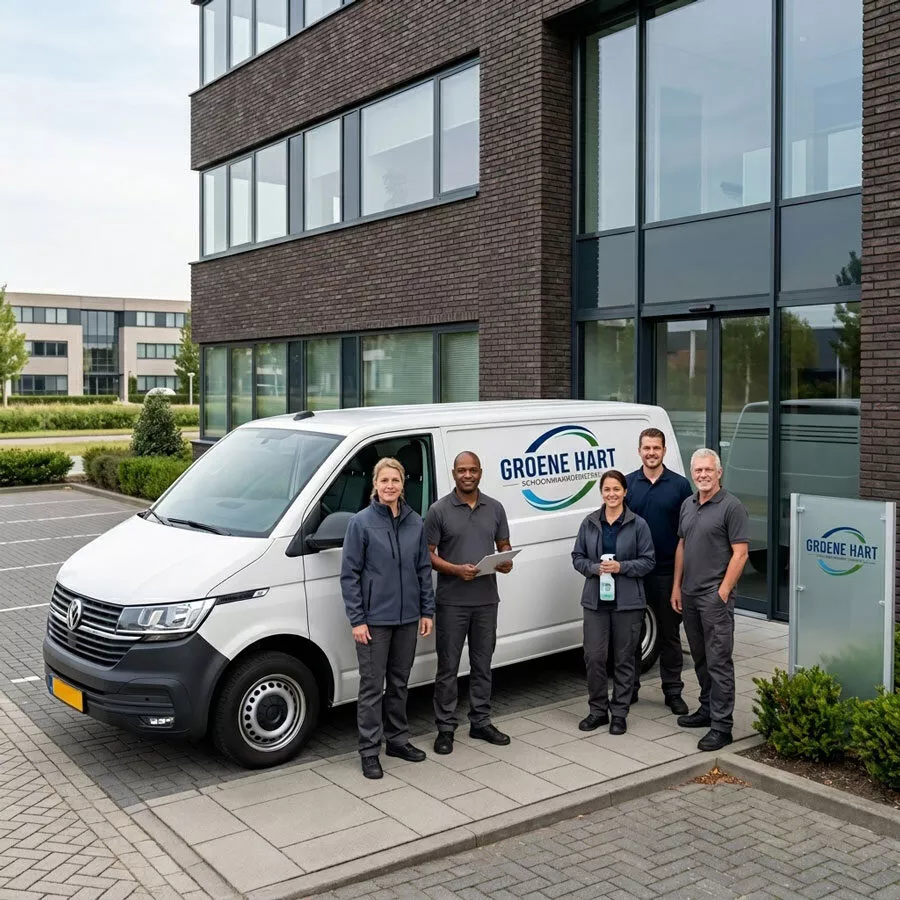
Schoonmaakbedrijf Groene Hart offers customized commercial cleaning, certified personnel, transparent pricing, a dedicated contact person, and over 10 years of experience. With sustainable maintenance and attention to your daily operations, waste collection points throughout the Netherlands remain well-maintained, hygienic, and ready for use.
Frequently asked questions
1. What are 7 tips to keep waste collection points cleaner with a better layout?
A clean waste collection point starts with a logical layout. Place waste bins in a clearly visible location, choose sufficient capacity, use clear pictograms, separate waste streams such as residual waste, PMD, GFT, and paper, ensure the bins are lockable, keep walkways clear, and schedule regular inspection rounds. This way, everyone knows immediately where waste belongs, and less clutter accumulates next to the container.
Also pay attention to the surroundings of the waste disposal point. A well-lit point with a hard, easy-to-clean surface prevents contamination and unpleasant odors. Cleaning company Groene Hart observes in practice that a clear layout and consistent emptying often have a greater effect than simply cleaning more frequently.
2. How do you set up a waste collection point practically and hygienically?
Set up a waste collection point according to the daily walking route of employees, residents, or visitors. Place the most frequently used bin in the most logical location and put bins for paper, plastic, metal, and drink cartons (PMD), and organic waste (GFT) directly next to it. Use color codes, large labels, and recognizable images so that waste separation doesn't become a mental exercise.
Preferably choose bins with a lid or flap, especially for food scraps and residual waste. Additionally, ensure sufficient space around the containers so that cleaning staff can work safely and easily remove debris. A regular cleaning partner in Utrecht helps you properly coordinate the layout and cleaning frequency.
3. Why is there often waste next to the container and how do you prevent that?
Waste next to a container is usually caused by full bins, unclear waste separation, an opening that is too small, or awkward placement. Missing labels also cause people to hesitate and quickly dump waste somewhere. This problem accumulates rapidly, especially around offices, apartment complexes, schools, and public locations.
Prevent overfilling by adjusting capacity to busy times, such as after lunch, on weekends, or after events. Place an extra bin when a container is regularly full and check the fill level at regular intervals. Moreover, a clean and tidy waste disposal point encourages people to dispose of waste properly.
4. Which waste bins and materials are best for a clean waste disposal point?
For a hygienic waste disposal point, sturdy, smooth, and well-sealable waste bins are the most practical. Plastic and stainless steel are easy to clean and absorb odors and dirt less quickly. Choose bins with a wide opening for paper and packaging, but use a closed system for residual waste and food scraps.
Use waste bags that match the capacity and replace them before they become overfull. A leak-proof inner bucket, moisture-resistant floor, and cleaning products for grease, sticky residue, and odors make maintenance noticeably easier. For heavily used waste disposal points, professional periodic cleaning is advisable to limit dirt buildup and pests.
5. How often should you clean and check a waste disposal point?
The appropriate frequency depends on the number of users, the type of waste, and the location. A waste collection point for food packaging, coffee cups, and residual waste usually requires daily checks. Paper bins in a quiet office can be emptied less frequently, as long as you monitor the fill level and maintain a tidy appearance.
Work with a fixed checklist for emptying bins, removing litter, cleaning lids, checking labels, and mopping the floor. Extra attention is important during hot days, after busy gatherings, and around holidays. With a professional cleaning plan from Schoonmaakbedrijf Groene Hart, your waste collection point remains fresh, safe, and presentable.


